
This work is licensed under a Creative Commons Attribution-ShareAlike 3.0 United States License.
Monday, December 6, 2010
A Reel Education: Composition
A Reel Education: Composition: "This video blog is all about composition. Take a look to get some pointers on the different size shots and get some pointers on how to plan..."

Composition
This video blog is all about composition. Take a look to get some pointers on the different size shots and get some pointers on how to plan and compose your camera shots.

A Reel Education: Composition by William K. MacTavish, II is licensed under a Creative Commons Attribution-NonCommercial-ShareAlike 3.0 Unported License.
Monday, November 29, 2010
A Reel Education: Technicolor Closes LA Film Processing Plant
A Reel Education: Technicolor Closes LA Film Processing Plant: "In this podcast I report on the closing of Technicolor's North Hollywood film release processing plant and how the company is positioning it..."
Camera Filters
In this podcast I discuss the three categories of camera filters and how the use of filters in general is waining in this digital production era.
Technicolor Closes LA Film Processing Plant
In this podcast I report on the closing of Technicolor's North Hollywood film release processing plant and how the company is positioning itself for the industry's move into the digital production and distribution
Saturday, November 27, 2010
Improving the Look with Filters
One thing that professional Cinematographers have been taking advantage of for a long time is camera filters. As we move away from film and into the digital age the use of filters, an understanding of how to use them and how they can improve the look of your image seems to be slipping away.
Filter are an intgral part of the imaging process. By using them the DP can alter the light that travel through the lens. He can create specific moods, give colors a new vibrance, enhance the contrast and provide just that little extra lift you need to help turn an okay image into a great shot.
With all of the different choices out there its easy for a new Cinematographer to get over whelmed with what each filter does. Basically filters fall into three categories.
Before I go too much further lets talk about white balancing. Which is a electronic color correction. Why do we white balance. The simple reason is so that skin tones will look normal under any color of light. To the camera light is one of two colors. Orange or Blue. Blue light is natural sunlight. Orange light is artificial tungsten light. Both Sunlight and Tungsten light have a range of degrees Kelvin (°K,) that they are measured in. Basically its 3200°K or 5600°K. Color correction filters shift the light so that either your film or digital sensor sees these two temperatures of light as normal. They modify the color of the light as it enters the lens. Two of the most basic color correction filters are the 80A and the 85. An 80A is blue and you would use it traditionally with Daylight film to shift tungsten light blue; and an 85 is orange and you would use it to shift Sunlight to match tungsten film or setting on your camera. These two filter make an overall change that affects the whole image. It's quicker than gelling all of the lights.
Light modification changes intensity or quality of the light. The two most common filters in this category are the Neutral Density (ND,) and the Polarizing filters. The NDs are used to cut the amount of light as they enter the lens to keep from over exposing. They don't change the color or quality of the light only the amount. NDs also allow you to open up in order to shoot with a smaller F/T-stop so you can get a shorter depth of field. The Polarizing filter changes the way the light ray moves and helps cut glare or increase color saturation of the sky.
 The sfx filter category has probably the most choices of different filters. From contrast, to fog, mist, day for night, star effects, soft nets and a bunch of other choices. This category is the one that takes the longest to master because of the amount of trial and error of finding out how each different filters reacts to different lighting conditions.
Controlling the image is what the Director of Photography does. With digital cameras the first filters to learn and get to know are the NDs and Polarizing filters. Once a budding Cinematographer has mastered these I suggest learning how to properly use Color Correction filters. Then move on to experimenting and using SFX filters. You will be surprised with what a simple piece of glass on the front of your lens will do for the quality of your image.
Filter are an intgral part of the imaging process. By using them the DP can alter the light that travel through the lens. He can create specific moods, give colors a new vibrance, enhance the contrast and provide just that little extra lift you need to help turn an okay image into a great shot.
With all of the different choices out there its easy for a new Cinematographer to get over whelmed with what each filter does. Basically filters fall into three categories.
- Color Correction
- Light Modification
- Special Effects
 |
| Graduated Blue #3 Filter |
 |
| Neutral Density (ND) Filter |
 |
| Polarizing Filter |

Controlling the image is what the Director of Photography does. With digital cameras the first filters to learn and get to know are the NDs and Polarizing filters. Once a budding Cinematographer has mastered these I suggest learning how to properly use Color Correction filters. Then move on to experimenting and using SFX filters. You will be surprised with what a simple piece of glass on the front of your lens will do for the quality of your image.
Wednesday, November 24, 2010
A Reel Education: Technicolor Drives Another Nail into Films Coffin....
A Reel Education: Technicolor Drives Another Nail into Films Coffin....: "Technicolor closing North Hollywood film release printing plant. Technicolor has been an iconic name in the film business for more than 95..."
Technicolor Drives Another Nail into Films Coffin.
 Technicolor closing North Hollywood film release printing plant.
Technicolor has been an iconic name in the film business for more than 95 years. The company is the world’s largest film processor. They are also a leading provider of production, post-production, and distribution services to content creators, network service providers and broadcasters.
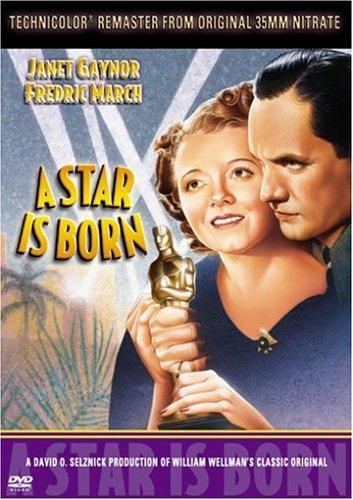 If you are film buff then you then you know that Technicolor has been associated with the color process since the early days of the industry. Technicolor made its name providing color cameras and prints for such Hollywood hits as A Star is Born, The Wizard of Oz, Singin' in the Rain and Fantasia.
As digital video has grown the company has been transforming itself from a film-focused lab to a company providing all manner of digital services, including digital intermediate and visual effects. Currently the company is the largest independent manufacturer and distributor of DVDs and Blu-ray Discs; and it has become a leading global supplier of set-top boxes and internet gateways. Technicolor also operates an Intellectual Property and Licensing business unit managing more than 42,000 patents.
 | |
| The Camera Rig from the ASC's 2009 digital camera test. |
But in this age of digital moviemaking the company has also seen the writing on the wall. With the failure of the California economy, and it’s pending collapse the company is looking for a way to cut costs and prepare for the future.
On Thursday November 18th, 2010 Technicolor confirmed that it is shutting down its North Hollywood release printing plant. It is moving all release print operations in North American to its Canadian plant located in Mirabel a suburb of Montreal.
Technicolor will continue to provide film processing in LA in the form of dailies, but will be closing most of its film processing and its printing plant. The factory does most of the film processing for the company.
Technicolor reports its actions are due to the theaters moving to digital projection technology . The company is preparing for a huge decline in feature film distribution print requirements in the coming years.
Technicolor reports its actions are due to the theaters moving to digital projection technology . The company is preparing for a huge decline in feature film distribution print requirements in the coming years.

Currently North American digital penetration now exceeds 30%. The reduced demand for film prints doesn’t require the company to keep two facilities. With Technicolor’s lease on the property in North Hollywood expiring next year and the escalating cost of union labor, taxes and other expenses in California it only makes since to move all of its North American distribution print operations to Mirabel. This shift means that Technicolor will no longer strike release prints in the United States. A first in the history of the company, and just another sign of the changes that new technology is bringing to the film industry.
Tuesday, November 23, 2010
A Reel Education: Lack of Respect for Modern Cinematographers
A Reel Education: Lack of Respect for Modern Cinematographers: "There is a lack of respect for modern cinematographers in our WYSIWYG HD video production world."
Monday, November 22, 2010
Lack of Respect for Modern Cinematographers
There is a lack of respect for modern cinematographers in our WYSIWYG HD video production world.
Saturday, November 20, 2010
A Reel Education: Film vs Video
A Reel Education: Film vs Vidoe: "A Reel Education has been fortunate that to have shot on all formats of film and in SD and HD video. One thing t..."
Film vs Video
 |
| 16mm Film |
 |
| HD Video |
 |
| SD Video |
In the beginning video the quality and glossiness of the image just didn't hold the same appeal as film. It was too fake looking too perfect without that "real" quality that makes film so appealing.
HD video is not the same as SD in a lot of different ways. As a guy who worked his way up the ranks of the production business via the lighting and grip departments I think of the way that HD handles light as its biggest challenge. The approach of film and HD video are almost polar opposites. In film you can have expose for the darks and let the brights go. Or you can expose in the mid-range and have latitude but up and down the EI with bright highlights and dark shadows. In SD video everything has to be really close in exposure or you get lots of noise in the picture. With HD exposure has to be to the brightest element in the frame. Although newer technologies are changing I still find the practice to be much the same.
 |
| Lighting a TV Pilot Bumper |
 |
| Sony PMW-F3 |
Film is still the gold standard of quality. What is it most always say when they see a video where lots of hard work has gone into the image quality. "Oh, it looks so much like...," or, "I wish it looked more like... film".
Producer's don't understand, or care, except for the bottom line, quality is secondary. In Hollywood when a project is shot on video the rate of a DP is less than with film, good for the bottom line. The original reason was that SD video didn't require the same workload as film, so the pay was less. No changes in the pay scale were made as HD came into existence, because it's still considered video and not its own new format, which it is. But the workload for a DP went up. One has to work harder to make HD video look like film than one does to make film look like film. But the producer's still want it to look like film... the gold standard... but it's only video so why should they pay a higher rate. Just a little rub of mine and many shooters in the business.
Another thing that I can say about video over film is that for years and years DP's were a requested and important production partner. They were the only ones who knew what it would look like, a video tap doesn't have the same look as the final processed film does and everyone had respect for the Director of Photography. Even with SD video there was still respect for the knowledge base of the Cinematographer. Now with HD video and the WYSIWYG of a HD monitor there is less respect, new DP's don't have the same skill level or knowledge base. Everyone including the client, producer, and director question choices made by the DP in lighting. They all think they know... better! No respect! And many cinematographers are tied to the the monitor, and have lost the skills and confidence to make decisions without it. The skill of understanding exposure and latitude is slipping away. The ability of many to use a light meter correctly is going away.
Technology is a good thing. I really like the images that some of the newer HD cameras are making. And I love the solid-state memory work-flow over both film and tape based work-flows. I really want to work with some of the new Arriflex cameras that have optical viewfinders and mechanical shutters. There is even one that all you have to do is switch out a magazine and "poof" it shoots digital or film. The footage I have seen from these cameras is so much better than the all electronic cameras that are "hot".
However, technology is also producing a generation of filmmakers who don't understand the basics of photography. Am I biased because of how I had to learn? Does it really matter if a DP understands how to really use a light meter or not?
I believe so but.... Time will tell.
Monday, November 1, 2010
A Reel Education: Lighting Questions
A Reel Education: Lighting Questions: "So here is a little quiz about lighting. Any textbooks on lighting should be able to provide the answers to these questions. I will provide ..."
Lighting Questions
So here is a little quiz about lighting. Any textbooks on lighting should be able to provide the answers to these questions. I will provide them in my next post.
1. Name the three lights in a three point lighting set-up.
2. What does a back light do?
3. What is a hair light?
4. What is the color temperature of tungsten light?
5. What is the color temperature of daylight?
6. What temperature scale is used to measure color?
7. Name one advantage and one disadvantage of open-faced lights.
8. Name one advantage and one disadvantage of Fresnel lights.
9. What is a round screen that is placed in front of the lights called?
10. If that same object mentioned in question #9 has a green frame, what does that mean?
If you provide your answers to these question in the comment field I will grade them for you. These are 10 basic questions that anyone interested in movie lighting should know. If you are looking for a textbook to study to answer these question try "Placing Shadows: Lighting Techniques for Video Production" by Chuck Gloman.
Good luck.
1. Name the three lights in a three point lighting set-up.
2. What does a back light do?
3. What is a hair light?
4. What is the color temperature of tungsten light?
5. What is the color temperature of daylight?
6. What temperature scale is used to measure color?
7. Name one advantage and one disadvantage of open-faced lights.
8. Name one advantage and one disadvantage of Fresnel lights.
9. What is a round screen that is placed in front of the lights called?
10. If that same object mentioned in question #9 has a green frame, what does that mean?
If you provide your answers to these question in the comment field I will grade them for you. These are 10 basic questions that anyone interested in movie lighting should know. If you are looking for a textbook to study to answer these question try "Placing Shadows: Lighting Techniques for Video Production" by Chuck Gloman.
Good luck.
Saturday, October 30, 2010
A Reel Education: Lighting
A Reel Education: Lighting: "Lighting is one of the most important things that you can do to make your film look good. Don't ever believe some camera manufacturer when t..."
Lighting
Lighting is one of the most important things that you can do to make your film look good. Don't ever believe some camera manufacturer when they say that you don't need to light your film. Hands down, the most time consuming thing that happens during production is good lighting. It has been a long time since the need has existed, where lighting was just necessary for exposure. With most modern camera's and film stocks we can now get exposure with very little light, but the mood, and feel of your film can be greatly affected by the lighting.
Think about this:
Even without an actor on screen - your audience in just a few seconds can gather a lot of information about the image they see on screen. A dark shadow filled shot is mysterious and scary. A bright low contrast shot is inviting and safe feeling.
Do you like walking around your house in the middle of the night with the lights off? Or do you prefer to do it in the middle of the day? Remember your audience feels the same way.
A few pointers:
Flood lights with a Fresnel lens produce hard single shadow beams of light. They are the best for lighting people because they produce only one shadow. You can soften this light by shooting it through a diffusion frame or clipping a diffusion gel on the doors of the light.
The larger the beam created by a diffusion material the softer the light will be.
But any type of light can be used to light your scene, candles, work lights, neon, florescent. It doesn't really matter, but remember the more you shape the light the better it will look to your audience.
Also remember to white balance your camera. Sunlight is 5600 degrees Kelvin which is blue in color. And Tungsten Quarts lights are 3200 degrees Kelvin or orange in color. Florescent lights have a puke green color of about 4500 degrees Kelvin, even color corrected Kino-flo tubes will generate this green spike the longer you burn them and the hotter the tubes become. It's always good to have some minus green on hand when using florescent lights.
For those who do lighting for a living there are four properties that are important to always remember.
I'd wager to say that good lighting is more important overall to the look of your film than what type of camera you shoot it with.
Think about this:
Even without an actor on screen - your audience in just a few seconds can gather a lot of information about the image they see on screen. A dark shadow filled shot is mysterious and scary. A bright low contrast shot is inviting and safe feeling.
Do you like walking around your house in the middle of the night with the lights off? Or do you prefer to do it in the middle of the day? Remember your audience feels the same way.
A few pointers:
Flood lights with a Fresnel lens produce hard single shadow beams of light. They are the best for lighting people because they produce only one shadow. You can soften this light by shooting it through a diffusion frame or clipping a diffusion gel on the doors of the light.
The larger the beam created by a diffusion material the softer the light will be.
But any type of light can be used to light your scene, candles, work lights, neon, florescent. It doesn't really matter, but remember the more you shape the light the better it will look to your audience.
Also remember to white balance your camera. Sunlight is 5600 degrees Kelvin which is blue in color. And Tungsten Quarts lights are 3200 degrees Kelvin or orange in color. Florescent lights have a puke green color of about 4500 degrees Kelvin, even color corrected Kino-flo tubes will generate this green spike the longer you burn them and the hotter the tubes become. It's always good to have some minus green on hand when using florescent lights.
For those who do lighting for a living there are four properties that are important to always remember.
- The Color of the light.
- The Direction the light comes from.
- The Quality of the light, how hard or soft of a shadow it makes.
- And the Intensity or quantity of light that that exists.
I'd wager to say that good lighting is more important overall to the look of your film than what type of camera you shoot it with.
Tuesday, October 19, 2010
A Reel Education: HCC Filmmaking Students
A Reel Education: HCC Filmmaking Students: "This is a series of interviews with students enrolled in Houston Community College's filmmaking program. Listen to their own words about wha..."
HCC Filmmaking Students
This is a series of interviews with students enrolled in Houston Community College's filmmaking program. Listen to their own words about what they think of the education that they are getting. HCC is very innovative in its approach to teaching filmmaking. Providing real world, on set instruction. Students are able to learn more in the few weeks of production than in entire semesters work of lecture and class work.
"The only way to learn how to make a move is to make a movie," Robert Rodriguez.
"The only way to learn how to make a move is to make a movie," Robert Rodriguez.
A Reel Education: The Preachers Daughter - Changes On the Production...
A Reel Education: The Preachers Daughter - Changes On the Production...: "This week The Preacher's Daughter film is undergoing some major changes. The show was to wrap on 10/20 but it is two weeks behind schedule. ..."
Monday, October 18, 2010
The Preachers Daughter - Changes On the Production
This week The Preacher's Daughter film is undergoing some major changes. The show was to wrap on 10/20 but it is two weeks behind schedule.
As I had stated before I normally work as a DP but was talked into being the Gaffer on this film. (The gaffer is the head of the lighting department.) The current DP isn't able to continue on the film, he has a conflict with other work.

Tonight I met with the Director who approached me about taking over the position of Director of Photography. I am sorry to see the original DP go.
Unfortunately, I am unable to step-up and be the DP. I have to return to my regular teaching duties on Thursday and Friday's at Houston Community College. As such the film is taking a long weekend break and looking for a new Director of Photography to take over.
Best of luck. I hope they can find someone who will be able to continue the beautiful look started by my good friend John Sherren.
As I had stated before I normally work as a DP but was talked into being the Gaffer on this film. (The gaffer is the head of the lighting department.) The current DP isn't able to continue on the film, he has a conflict with other work.

Michell Mower the director
Tonight I met with the Director who approached me about taking over the position of Director of Photography. I am sorry to see the original DP go.
Unfortunately, I am unable to step-up and be the DP. I have to return to my regular teaching duties on Thursday and Friday's at Houston Community College. As such the film is taking a long weekend break and looking for a new Director of Photography to take over.
Best of luck. I hope they can find someone who will be able to continue the beautiful look started by my good friend John Sherren.
Subscribe to:
Posts (Atom)